

Prayer is a Banner of Protection
We underestimate the power of prayer.
So it came about when Moses held his hand up, that Israel prevailed, and when he let his hand down, Amalek prevailed.
But Moses’ hands were heavy. Then they took a stone and put it under him, and he sat on it; and Aaron and Hur supported his hands, one on one side and one on the other. Thus his hands were steady until the sun set.
So Joshua overwhelmed Amalek and his people with the edge of the sword. (Exodus 17:11-13 NASB)
The people of Israel were under attack. Moses immediately implemented a strategy that was both natural and spiritual. He instructed Joshua to take practical steps to defend themselves on the battlefield; then Moses took spiritual steps by placing himself high on a mountain to intercede for the army as they fought.
Effective leaders initiate action in both the physical and the spiritual realms.
Moses’ position was one of intercession. With arms lifted as a spiritual “banner” of protection, Moses stood in the gap, fighting spiritually while Joshua was fighting physically.
There are people in your life who, today, are fighting battles. They’re resisting the attack of the enemy in areas such as sickness, financial stress, depression, fear, and broken relationships.
Although many of them may also be people of faith, who themselves call on the Lord, they need someone to intercede for them in order to experience breakthrough and victory.
An interesting facet of this story is that Moses’ own hands became heavy, and he found himself in need of support. The intercessor needed intercession!
Praying for others can become very heavy. In the spiritual realm an intercessor truly “bears the weight” of prayer. The old-school saints used to call it a “burden” for others.
Prayer warriors – especially those who have the gift of mercy, who empathize deeply with others – keep in mind that you cannot bear the weight alone. Even intercessors need intercession.
If prayer is one of the most powerful forces on earth, then imagine the exponential power when there is agreement and partnership in prayer!
Father,
Thank you for the privilege to pray for others. May my intercession become a banner of protection over Your people! And thank You for those whose hands of prayer are raised over me today.
In Jesus’ name, amen.
Wisdom’s Whisper
The feelings of frustration tempt us to make impulsive and costly decisions.
The waitress who walks out mid-shift because she’s having a bad night.
The baseball player who quits mid-season because he is in a slump.
The husband who walks out mid-marriage because he can’t handle the stress.
Sometimes it’s good to pause in the midst of frustrating moments and listen for the voice of wisdom. Wisdom doesn’t yell, or weep, or beg. Wisdom whispers.
Jesus told the parable of a frustrated vineyard owner:
And He began telling this parable: “A man had a fig tree which had been planted in his vineyard; and he came looking for fruit on it and did not find any.
And he said to the vineyard-keeper, ‘Behold, for three years I have come looking for fruit on this fig tree without finding any. Cut it down! Why does it even use up the ground?’
And he answered and said to him, ‘Let it alone, sir, for this year too, until I dig around it and put in fertilizer; and if it bears fruit next year, fine; but if not, cut it down.'” (Luke 13:6-9 NASB)
The interesting thing about this parable is that Jesus left it open-ended. Did the owner give the tree another year? Did the tree bear fruit after all? Did he eventually have to cut it down?
Extending grace and patience to a situation does not ensure positive results. It does, however, give an opportunity for change.
What situation in life is causing you frustration? Instead of making an impulsive and potentially costly decision, perhaps you could extend grace and give an opportunity for change.
Listen for wisdom’s whisper.
Even if you end up cutting down the tree, you will rest well, knowing that you gave it every opportunity to be fruitful.
When the Rains Come
Difficulties in life are inevitable; but strength of soul will sustain you.
Everyone who comes to Me and
hears My words and acts on them, I will show you whom he is like: he is like a man building a house, who dug deep and laid a foundation on the rock; and when a flood occurred, the torrent burst against that house and could not shake it, because it had been well built. (Luke 6:47-48 NASB)
Jesus described this “strength of soul” as:
1. One who comes to Jesus.
2. One who hears the words of Jesus.
3. One who acts on the words of Jesus.
I use the term “soul” very intentionally, in contrast to the word “spirit.” Certainly we need strength of spirit in order to endure the storms of life, but the soul is the place where spiritual meets natural.
My soul is where I make practical decisions that determine the course of my life. My thoughts, my feelings, and my decisions can either be disciplined and healthy, or they can run a renegade course of self-destruction.
I may not be able to avoid the storms of life, but I can choose to come to Jesus everyday.
I may not be able to escape the rains and floods of circumstances, but I can choose to hear what Jesus is saying.
I may not be able to get around life’s difficulties, but I can choose to act on what Jesus says…and He will bring me through!
Choose today to make the spiritual more practical. Choosing to engage a relationship with Jesus will prepare you for those times when the rains come.
How do we “come, hear, and do?”
1. Spend time in God’s Word today.
2. Spend time in worship (giving thanks) to God.
3. Spend time worshipping God (declaring His goodness).
It’s not complicated. But it’s life-changing. The foundations you dig today will sustain you when the rains come.
Which Bible Translation Should I Use?
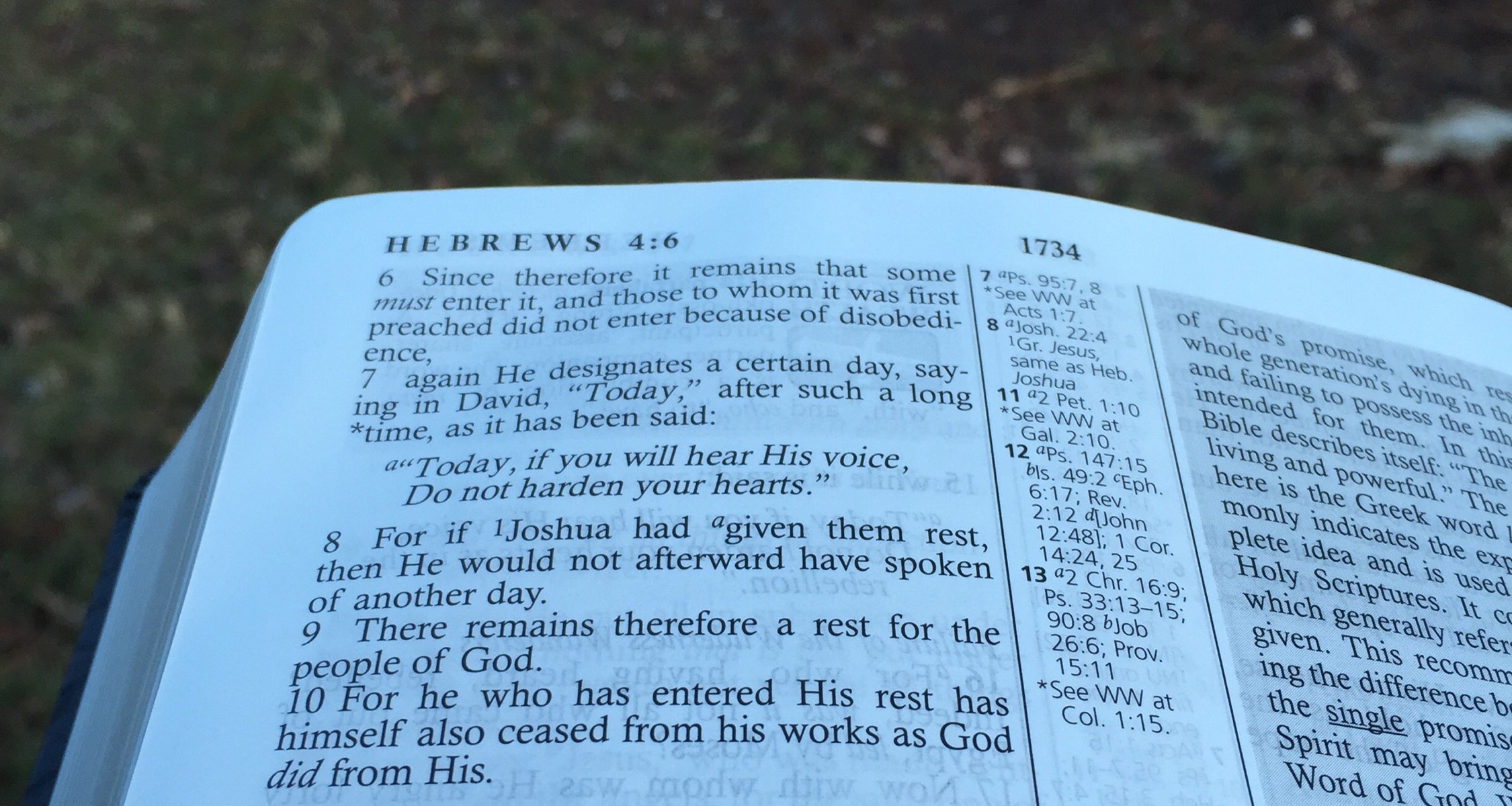
With so many translations available, and more being published every year, many people wonder which translation they should use.
The truth is there are many translations that are well worth reading. My practice is to use a different translation each year for my personal devotion time. Using a Bible app is an easy, inexpensive way to explore different translations.
Having said that, not all translations are as accurate as others, and some, frankly, should be avoided.
The Bible is a compilation of books, letters, and accounts penned over the course of many years by numerous writers inspired by the Holy Spirit.
The original languages of the Bible are Hebrew, Greek, and Aramaic. Because we believe that, in its original languages, the Bible is inerrant (has no errors) and inspired (breathed by God), it is essential that we use translations that most accurately reflect those original languages.
Today’s biblical translations typically fall into one of three categories:
1. Word-for-word translations are the most trustworthy. Careful detail is taken to ensure that each and every word is translated as accurately as possible from the original languages. These translations are a must-have for every believer as a primary source of Scriptural study.
2. Thought-for-thought translations, although not as precise, convey the basic thoughts of the original language. These translations are great for devotional or supplementary use.
3. Paraphrases are, essentially, a copy of a copy. The contributors typically begin with an already translated version of the Bible, and then reword it. These translations may not be “bad,” but they should always be weighed against a more trusted source.
Here are a few translations to consider (in order of accuracy and in order of my recommendation):
Word-for-word translations:
1. New American Standard Bible
2. Amplified Bible
3. English Standard Version
4. New King James Version
Thought-for-thought translations:
1. New International Version
2. New Living Translation
3. New International reader’s Version
4. The Message
My personal favorite study bible is the New Spirit Filled Life Bible in the NKJV. The accuracy of the translation, coupled with the excellent notes and study materials make it my top recommendation for adults.
For teenagers, I recommend the Student Version of the same – the New Spirit Filled Life Bible. There are other great ones for teens, but I recommend this one to help get our church’s teens into the same type of Bible that we use in our church overall.
For kids I recommend The Hands On Bible (NLT); and then the Read With Me Bible is great for parents with toddlers. Again, there are many good ones, but these are the ones I recommend at our church.
I highly recommend the use of Bible apps and technology to have greater access to the Bible, but I also strongly urge every believer to have a quality, trustworthy study bible – the kind with actual pages. Taking advantage of study notes and cross-references will take you to a deeper place of understanding God’s word and living in His promises! And your own personal handwritten notes make it that much effective to reflect what God reveals to you!
Whether you are just beginning to read God’s Word, or have been a studier of His Word for many years, the Bible is foundational to your life.
The discipline of reading the Bible will illuminate your mind to its context and content.
The devotion of reading the Bible will remind you that this is not just a book, but an encounter with the living, breathing Word of God – Jesus Himself is the Word made flesh.
The delight of reading the Bible is that it holds promises and hope for everyday life, a guide for wisdom, and a refuge for the weary.
The Word of God will change your life!
Daybreak Awaits

Perhaps this has been a year of struggle. If so, daybreak awaits.
The biblical account of Jacob wrestling with the Angel of God is intriguing. Jacob’s father (Isaac) and grandfather (Abraham) had both encountered God on an epic, yet very personal level. Jacob, on the other hand, knew about God, but had not yet encountered Him. (Many people today find themselves in a similar place.)
Being a “take-matters-into-your-own-hands” kind of person, Jacob had learned and mastered the art of manipulation. He knew what he wanted and did whatever it took to get it. It’s a skill he learned from his mother, actually. In fact, together Jacob and his mother schemed a way to steal both the birthright and the blessing from Jacob’s brother, Esau – a task that required premeditative thought and a willingness to blatantly lie to his blind father about his identity.
Of course, he was then forced to abruptly flee for his life. Ironically he ended up working for a family member who was a worse con-man than himself. Laban got 14 years of labor out of Jacob, while Jacob received two wives and several doses of his own medicine.
Eventually Jacob’s past – specifically his brother, Esau – caught up with him. Jacob stood on the eve of his reunion with Esau, wondering if he would come out of it alive or not. (Family reunions can be brutal.) Sending his wives, children, and servants in separate directions, Jacob was left alone.
Then God showed up.
The account in Genesis describes a Man. The prophet Hosea later specifies Him as an Angel. Many theologians believe this to be a pre-incarnate Jesus appearing to Jacob. Whether it was God Himself or not, we know that God was being represented.
What we do know is that a fight broke out. The intense, exhausting struggle lasted all night long.
Genesis 32:22-32 (NKJV)
He took them, sent them over the brook, and sent over what he had. 24 Then Jacob was left alone; and a Man wrestled with him until the breaking of day. 25 Now when He saw that He did not prevail against him, He touched the socket of his hip; and the socket of Jacob’s hip was out of joint as He wrestled with him. 26 And He said, “Let Me go, for the day breaks.”
But he said, “I will not let You go unless You bless me!”
27 So He said to him, “What is your name?”
He said, “Jacob.”
28 And He said, “Your name shall no longer be called Jacob, but Israel; for you have struggled with God and with men, and have prevailed.”
29 Then Jacob asked, saying, “Tell me Your name, I pray.”
And He said, “Why is it that you ask about My name?” And He blessed him there.
30 So Jacob called the name of the place Peniel: “For I have seen God face to face, and my life is preserved.” 31 Just as he crossed over Penuel the sun rose on him, and he limped on his hip. 32 Therefore to this day the children of Israel do not eat the muscle that shrank, which is on the hip socket, because He touched the socket of Jacob’s hip in the muscle that shrank.
Jacob wrestled with God until the breaking of day. I’m captivated by that phrase – “the breaking of day.” If it is true that it’s always darkest before the dawn, then it is powerful to realize that the deepest of darkness can be utterly broken by a single ray of light.
Perhaps 2014 has been a year of struggle, a year of wrestling, maybe even a year of darkness; but daybreak awaits.
Although I cannot promise or prophesy an immediate turnaround for you on the last stroke of midnight as we enter the new year, I can declare this promise: if you are willing to wrestle some things out with God, you will experience “the breaking of day.”
The breaking of day comes at the cost of confrontation.
Jacob had to face the fears and sins of his past in order to be set free to his future. Are you willing to allow God to take you back to unhealed, unhealthy areas of your life? It is there that we must face two enemies: shame and condemnation. God wants to break their strongholds on your life, but you must be willing to confront them.
The breaking of day comes at the cost of confession.
As the wrestling match continued through the night, Jacob refused to give in. That is, until the Angel of God asked, “What is your name?” That’s when time seemed to stop.
The last time he had been asked that question, Jacob turned to his own father and lied about his identity, and in doing so confirmed that he truly was a “deceiver and supplanter” as his name implied.
The Angel fixed his eyes on Jacob and awaited his answer. Letting his guard down, Jacob admitted: “I am Jacob (a deceiver).” There is only one way to be set free from the sins and regrets of your past – freedom begins with confession.
There are two primary words the Bible uses to describe “sin” – (1) Transgression refers to the outward act of sin, and (2) Iniquity refers to the inward motivation to sin. Admitting our transgressions is one thing, but wrestling with God forces us to expose the iniquity in our own hearts.
So, why does God bring us to that point of “sorrow of soul” and “humbleness of heart?” Because He wants to set us free. In fact, Isaiah eloquently prophecies of this very promise (Isaiah 53:5), when he wrote of the Messiah: “But He was wounded for our transgressions, He was bruised for our iniquities.”
Listen carefully – Jesus was wounded (outward bleeding) for our transgressions (outward acts of sins), and Jesus was bruised (inward bleeding) for our iniquities (inward motivation to sin). Jesus came to set us free, inside and out! And it begins with confession.
The breaking of day comes at the cost of building our character.
After his all-night wrestling match, Jacob limped due to a dislocated hip caused by the Angel. Whether the limp was permanent or temporary, it changed the way he walked. That’s what happens when you wrestle things out with God – He changes the way you walk.
Once you have confronted the demons of your past, confessing your transgression and iniquity to God, then you realize who you were truly created to be. God changed Jacob’s name to Israel, giving him new perspective and promise for life. Jacob literally walked away from this encounter a different man.
Building character is not for the weak, but transformation is worth the pain of change.
At the breaking of day Jacob had a new name.
At the breaking of day Jacob had a new walk.
At the breaking of day Jacob had a new mission.
At the breaking of day Jacob had a new testimony.
No matter your past…
No matter your struggles…
No matter the darkness…
Daybreak awaits.
 Pastor Dale Jenkins